Shipping container architecture/ cargotecture is a form of architecture using steel shipping containers that originally used for over-rail shipment of bulk goods into residential occupancy and commercial storefront applications. This is especially useful in urban environments where space is more limited and the price of land is more a barrier to entry for prospective home owners and business developers. Shipping containers can be used as the main structure for efficiency dwellings or alternatively used as a basis of structure for contemporary architectural design rather It is eco-friendly than traditional building structure which consist of brick, wood and cement.The Kabin, Selangor
We reach to The Kabin after the experiencing trip to Sekinchan which is two days ago in last month of July. This unique container-type lodging unit with a smart modular concept situated in front of Pantai Remis, Kuala Selangor. This container lodge is quite an eye opening to me and all SABE students, as well as idyllic when we stay for two days.


This is The Kabin clubhouse that consist of reception counter with cafe, which uses shipping containers structure but extending the top of container for higher ceilings with slanted roof as a modern twist for container.
 When going inside the clubhouse, the design is similar of going to famous Western cafe restaurants. It is also an alfresco dining area that serves daily breakfast and all day snacks as well as drinks. The clubhouse is equipped with satellite TV set as entertainment for guests.
 This is a barbecue(BBQ)place where all guests prefer a more laid back dinner to use it, this BBQ alfresco is available on a first come first serve reservation and plus a minimal fee. Non halal foods and products is not permitted.
 The 50 ft swimming pool is next to the clubhouse. It is best for visitors to take a swim after the lunch meals and cool off during hot sunny days. The wading pool is available for kids to enjoy the fun of splashing at the waters.


THE FACILITIES
The only facility that interests me the most is the tree house because this is a perfect place to chillax, especially for everyone wants a quiet and solitude place to hide from public. It is a good chance to close to the nature and watching the beach with bird eye view. Have to book RM100 per night if you want spend the whole night in the tree house.
The cabin I stay is DURBAN container with Sarah which is my room mate, it is only a container can accommodate 2 people only with Queen bed. This container lodge is facing the swimming pool but the sound insulation installed in it so we don't have any problems with the noise made by people playing at the swimming pool.


The sketching goddess Wynne and my course mates helping me as well as each other for measuring the Durban container dimensions because i cannot measure it on my own, even i measured it incorrectly. The measurement for DURBAN container with external dimension is 2440 x 5995 x 2550mm only while internal dimension will be 2185 x 5550 x 2300mm including floor slab thickness about 21mm. External wall thickness is 150mm, and the container is lifted 260mm higher from the ground. The toilet dimension is only 2185 x 1160mm. The space is smaller because it is the combination of two containers only.
The other container is HAMBURG, which accommodates 6 people have 11500 x 2440 x 2680mm as ground floor dimension. First floor is 2440 x 4500 x 2430mm. Interior wall thickness is 135mm, floor slab is about 21mm and the ceiling height is 2290mm(including the floor slab. Toilet width is about 2150 x 1750mm. The total height of 2 containers stacking together will be 5260mm high. It also has plaster wall and ceiling with timber flooring.
Inspirations for container

Location : Curacavi,Chile
Name : Manifesto Infiniski
Designed by Raquel Izurzu fromJames & Mau Architecture
Manifesto is for the company House of Architecture and Construction of sustainable buildings Infiniski. Using three 160 m2 maritime "containers" to experience the ideas that define and guide the buildings that day Infiniski develops for its customers. It is the spearhead of Infiniski as the F-1 it is in the automotive industry.
The project takes into account concepts of bio-climatic design as "Form Follows Energy" techniques "dressing and undressing" the home adapt to the seasons and get a passive heating and cooling in winter and summer respectively. This results in a lower energy demand in the life of the house.
The pre-fabricated construction resulting in lower energy expenditure and better management of waste resulting from the same. The materials are 85% recycled as recycled newspaper pulp for insulating housing; reused as shipping containers or pallets and eco-friendly thanks to certified wood.
The use of renewable energy for heating water and heating linked to bio-climatic design reduces power consumption by 70% compared to traditional systems.
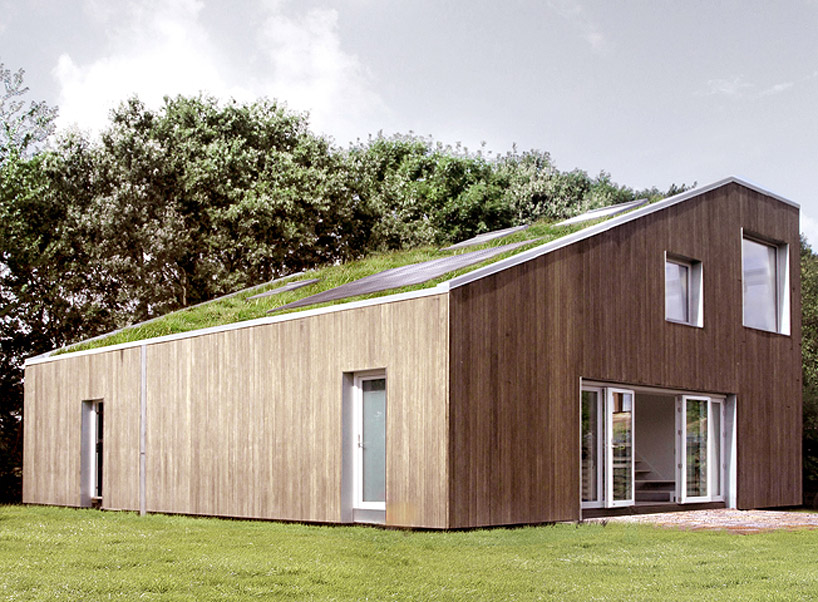
Location : Wuxi,China
Name : WFH house
Designed by Mads Møller from Arcgency
Copenhagen-based Arcgency takes to task the enormous percentage of the world’s resources used in the making of architecture. in keeping with a self-imposed policy of ‘resource conscious architecture’ the ‘WFH house’ is an exportable dwelling made up of three stacked shipping containers. the carbon-neutral prefabricated house was underwritten by worldFLEX home, a danish consortium which touts a plethora of modular zero-energy residences. in keeping with changing European energy policy, the architecture is designed to produce more energy than it consumes through the use of up cycled shipping containers as a steel frame, a sustainable bamboo facade, a rainwater collection system, solar cell-clad green roof and permeable paving. skylights and optimal orientation also work with the flexible structure to adapt to sites worldwide, including earthquake-prone areas. the modular units allow for a variety of typologies, from the individual villas like the WFH house to multi storey townhouses. for the first time, the sustainable concept of prefabrication meets a housing system that exceeds the demands of ‘active house’, the international environmental building standard. helped by a short construction period, the dis-mountable home can follow the client in true cradle-to-cradle fashion. The project is organised around a mixed-use, double-height space containing the kitchen, living and dining room. the generously lit area is punctured by glazed doors, inviting the greenery into the minimalist geometry of the building. while infinitely configurable, the basic form of the structure consists of two rows of 40 foot high standard modules, subdivided into bedrooms and a landing on the mezzanine floor. the result is a home of startling self-containment and a testament to the potential of architecture to seamlessly weave into its immediate and global context.
Dubbed the ‘FLEX space’ the double height ground level allows access to multiple parts of the program.
(left): Glazing allows outdoor views between the kitchen and dining areas.
(right): A view of the kitchen island, fitted with a wired module for appliances.
(left): View of the open dining space from the kitchen.
(right): The kitchen allows for casual dining.
The landing retreats from the living area and can be used as an additional space for play and relaxation.
(left): skylights allow ample interior lighting.
(right): the bedroom are 15 square meters, half the area of a shipping container.

Interior views from the children’s room.


No comments:
Post a Comment